Why real-time climate data accuracy matters
Static reports are outdated the moment they’re published. Learn why live tracking is becoming the new standard.
5 min read
Sep 1, 2025

Traditional ESG reports often arrive months late. By the time investors see them, the numbers no longer reflect reality.
Delayed data means teams can’t adapt quickly.
Outdated metrics reduce trust in your reporting.
Slow insights keep you behind competitors.
⏱️ Real-time tracking = instant action and greater credibility.
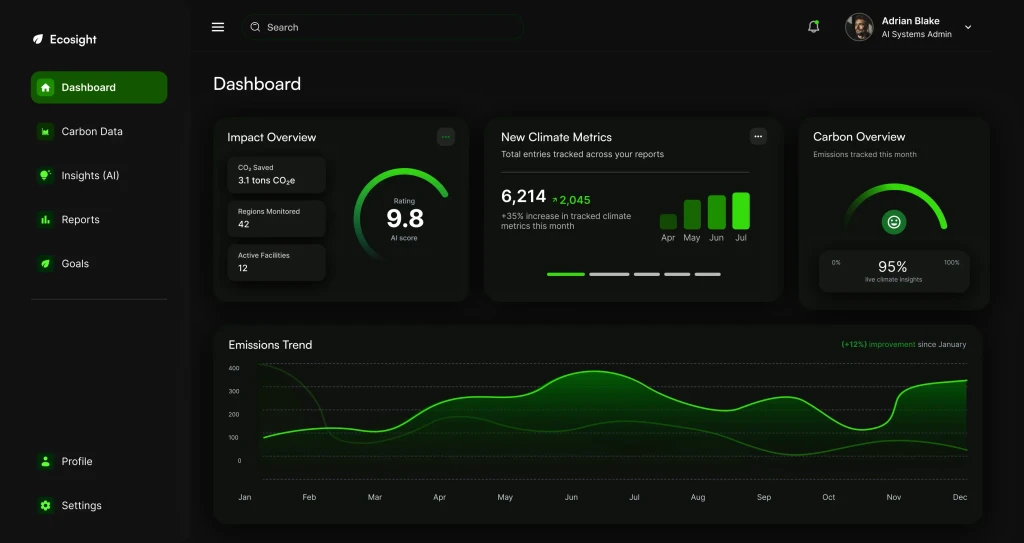
Live climate dashboards give founders and investors the same source of truth. Carbon, water, and energy data update automatically — helping teams respond in weeks, not quarters.
Centralize Metrics
Consolidate emissions, energy, and resource data in one platform. Manual spreadsheets create silos and errors. 📊 One dashboard beats 20 files.
Automate Updates
Use IoT sensors, APIs, or integrations to feed your system. Automating reduces human error and saves hours weekly. Investors prefer live portals over PDF reports. Show data with clarity, not clutter.
🌍 Climate accountability is not yearly — it’s daily.
Stay Connected
Follow us for product updates, insights, and climate tech news.